


Abraham Luzzi has emerged as one of Uganda’s notable public figures by combining entrepreneurship, community engagement, and a growing commitment to governance reform.
With business interests spanning multiple sectors in Uganda and extending into regional and international markets, Luzzi has increasingly used his private-sector experience to contribute to national conversations on public policy, economic transformation, service delivery, and accountability.
His profile rose significantly during the campaign for the Kampala Central parliamentary seat ahead of Uganda’s January 2026 general elections.

Although he fell short of winning the constituency, the campaign marked a turning point, introducing him to a wider national audience and establishing him as a prominent advocate for institutional reform.
Unlike many political campaigns centred on personalities, Luzzi focused on policy. His platform emphasised strengthening public institutions, improving government efficiency, enhancing accountability, and creating conditions that support sustainable economic growth.
Since the elections, he has remained actively engaged in public affairs through media interviews, community outreach, and policy discussions.
His continued visibility has reinforced the view that his interest lies not only in elective politics but also in advancing long-term governance reforms.
A recurring theme in Luzzi’s public engagements is the need for leaders to remain closely connected to the people they serve.
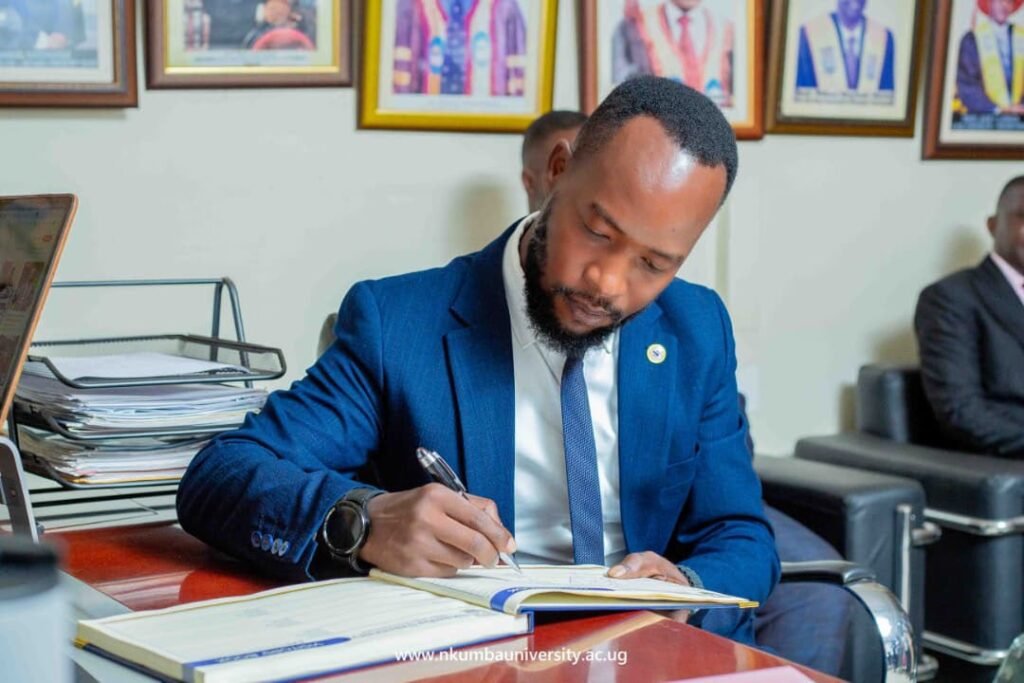
He has consistently argued that public officials should spend more time in communities rather than relying solely on reports compiled in government offices, maintaining that direct interaction with citizens provides a more accurate understanding of service delivery challenges and strengthens public accountability.
Healthcare has also featured prominently in his policy advocacy. Luzzi has repeatedly called for the implementation of a national health insurance scheme, increased investment in public health facilities, and renewed public confidence in Uganda’s healthcare system.
He has further encouraged government leaders to seek treatment in local hospitals whenever possible, arguing that confidence in public institutions should begin with those entrusted to lead them. His family’s decision to welcome their child at a Ugandan hospital was widely seen as reflecting that conviction.
Beyond healthcare, Luzzi has advocated reforms within the public service, including introducing performance-based renewable contracts for sections of the civil service. He believes promotions and continued employment should increasingly be guided by measurable performance, efficiency, and the quality of services delivered to citizens. While the proposal has generated varied opinions, it has also contributed to broader conversations about improving accountability and productivity within government.
His wider reform agenda includes calls for a leaner and more efficient government, stronger anti-corruption measures, accelerated digitalisation of public services, faster administration of justice, prudent management of public resources, and policies that promote transparency across public institutions.
Drawing on his entrepreneurial background, Luzzi frequently argues that Uganda’s private sector should play a leading role in creating jobs, driving innovation, and accelerating national development.
He has consistently advocated reducing bureaucratic barriers, supporting enterprise development, and creating an investment climate that encourages business growth and competitiveness.

Although it would be difficult to attribute policy reforms to any one individual, many of the issues Luzzi has consistently championed continue to feature prominently in Uganda’s national discourse.
His influence has been less about claiming ownership of reforms and more about sustaining conversations around governance, accountability, and institutional effectiveness.
Whether regarded as an entrepreneur who ventured into politics or as a governance advocate pursuing long-term institutional change, Abraham Luzzi has established himself as an active participant in Uganda’s evolving policy landscape.
As debates on governance, public accountability, and economic transformation continue, his ideas remain part of the broader national conversation, irrespective of political affiliation or electoral outcome.