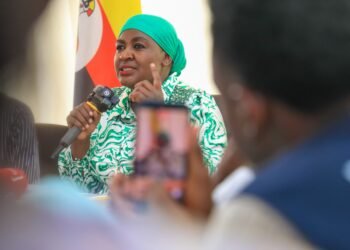


The Office of the National Chairman Manager, Hajjat Hadijah Namyalo Uzeiye, has raised concerns over the cost of borrowing, the exchange rate and electricity tariffs, warning that the cost of doing business could undermine investment, job creation and economic growth.
SPA Namyalo questioned whether monetary and fiscal policy measures were making it harder for entrepreneurs to access affordable financing and expand their businesses, calling for greater scrutiny of decisions that affect the private sector.
Addressing the media on Friday, October 16, 2026, she argued that while monetary stability was important, the measures adopted to achieve it should not place unnecessary pressure on businesses and individuals seeking credit.
“The monetary stability is important, but it must not necessarily undermine productivity of investment, job creation and economic growth,” she said.
Her remarks followed concerns she had raised about the reported increase in the Bank of Uganda’s Cash Reserve Requirement from 11 per cent to 13.5 per cent, a measure that requires commercial banks to hold a larger proportion of their deposits as reserves.
Namyalo questioned the implications of the adjustment for access to credit, particularly among small businesses and entrepreneurs who depend on bank financing to sustain their operations.
She also expressed concern about the charges associated with banking services, arguing that the cost of accessing financial services could discourage some Ugandans from participating in the formal banking system.

Namyalo further questioned the level of the dollar against the Uganda shilling, saying exchange-rate pressures could complicate business planning, raise the cost of imports and make it more expensive for Ugandan traders to transact with international partners.
She said the situation was particularly concerning for businesses that import goods and equipment from countries such as China, where transactions are commonly conducted in foreign currencies.
“The dollar rate is high. The taxes are high,” she said, arguing that the combined cost of doing business could constrain entrepreneurs and discourage business expansion.
Namyalo also called for greater attention to Uganda’s export capacity, citing coffee, tea, cocoa and cotton as products that could generate foreign exchange and support the economy if production, value addition and market access were strengthened.
She questioned whether enough was being done to support producers and exporters to compete in international markets, arguing that a stronger productive base was necessary for sustainable economic growth.
Her remarks come amid broader policy discussions on how Uganda can increase exports, attract investment and support local businesses while maintaining macroeconomic stability.
On electricity, Namyalo said the cost and reliability of power remained important considerations for businesses and households, particularly as the country seeks to expand its use of technology, science and industrial production.
She argued that affordable and dependable electricity was essential for achieving the country’s industrialisation and digitalisation ambitions.
“How can we talk about science and technology without electricity?” she asked, calling for closer attention to the cost of power for domestic consumers and businesses.
Namyalo compared Uganda’s electricity costs with those in Tanzania, questioning why consumers and enterprises should continue to face affordability concerns despite Uganda’s own electricity generation capacity.

She called for an explanation of the factors influencing domestic electricity tariffs and urged the relevant authorities to ensure that electricity pricing supports industrial productivity and household welfare.
Her concerns mirror the wider challenge of balancing investment in electricity generation and distribution with the need to provide consumers with reliable power at affordable rates.
Namyalo also linked the issues of credit, taxation, foreign exchange and electricity costs to the implementation of President Yoweri Museveni’s economic agenda, urging government institutions to ensure that policies translate into tangible benefits for citizens.
She said the President’s manifesto should be implemented in a manner that supports economic transformation rather than remaining a set of commitments on paper.
“Let the man implement his manifesto as written in the booklet. Let it not remain in the booklet, but rather be of national interest and implementation,” she said.
Namyalo argued that attention should be directed towards ensuring that policies implemented by government institutions advance the economic objectives set out by the President.
Her intervention adds to calls for policymakers to explain the implications of economic decisions for households, investors and small businesses, while ensuring that efforts to maintain stability do not unnecessarily constrain productive activity.
The concerns also highlight the importance of coordination among monetary authorities, fiscal policymakers and electricity regulators as Uganda seeks to expand investment, strengthen exports and improve household welfare.